Attack on Titan – Episode 5

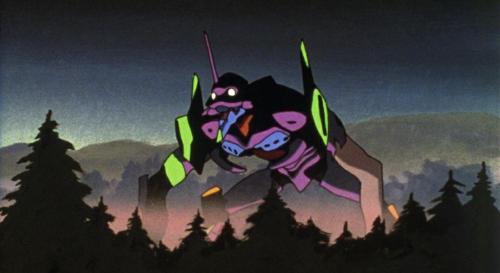
HOLY SHITTING FUCK THERE’S A TITAN AT THE GATES WHAT THE FUCK DO WE DO NOW.

Episode 5

3:57 – Wow, they did an awesome job conveying a sense of momentum, scale, and speed in that encounter. I think they were going for something like how we must appear to flies, and it certainly worked – the slow but unimaginable power of the titan, the constant whiplash of the three dimensional cords… good stuff

5:07 – The lone doll in the street, pretty much the required marker of an abandoned town. We lose more dolls that way…

5:48 – Nooo Franz and Hannah, don’t let the camera catch you solemnly swearing to protect each other! Noooo…

6:45 – Goddamnit Armin. Wait in the fucking car if you have to.

9:42 – This scene is pretty vintage samurai fare, right down to the holding back in order to let your lord maintain his ego. But it’s executed well enough, which I guess is kind of the point of all of this – it’s taking some classic shounen ideas, some classic war film ideas, some classic samurai film ideas, etc etc, and just making a well-executed riff on them with a fun core concept. Nothing wrong with that

10:30 – It seems like this whole army really likes the idea of keeping their most useful soldiers in the least useful/dangerous locations. I guess according to traditional warfare, this makes sense, since highly valued skills are generally about a soldier’s use as a tactical/strategic thinker or leader, and you’d rather have your grunts kill their grunts than your best be mowed down in a melee. But here the “best soldiers” are just the best fighters, plus the titans have no hierarchy, do not know to focus on targets of opportunity, etc… you’d think it’d be better to use the best soldiers wisely throughout the battlefield, not just have them guard the rear.

Although, considering that scene with the lord and Pixis, this could very well become a plot point, where our brave and talented recruits lead to some structural changes in their “lose as slowly as possible” focused military

12:21 – I like that this whole episode is just Eren walking around and Kamina-ing people into shape

13:05 – Holy shit he even headbutted her.

13:45 – “I couldn’t die even if I were killed here.” Well, I’m not above saying it. Hate to tell you, Eren – people die if they are killed

15:00 – Eren just sitting politely in class, mouth agape in his silent horror face.

The pacing of this episode is pretty weird – a minute of frenetic action, titans start attacking the city, and now we’ve found time to introduce some new characters, run through three separate pep talks, and have a biology class flashback. Not sure about it

15:16 – Why did historic guards wear wizard hats? Wait, fuck that, why don’t current guards wear wizard hats?

16:08 – Ah, I get it. I’d already read past this point, so I’d forgotten we hadn’t fully established how their battles work yet. That’s certainly something the show needed to do before we got into the action

16:45 – And now with this fourth pep talk, along with thinking about the skill analysis from last episode, I’m actually pretty content with the work here – they’re not just hitting classic scenes or buffing our impression of the leader, they’re clearly indicating “leadership potential.” Which hopefully means this show will get pretty damn tactical about the various roles our heroes play within the squad, which I am all for

17:15 – Yesss, these close cam shots are awesome. I love the sense of speed they’re creating here

And Done

WELL SHIT. Squad crushed, main character devoured, mankind is doomed. I think I’m gonna go sit down for a while.

Yahari Ore no Seishun Love Comedy wa Machigatteiru – Episode 5

Welp, you all know how I feel and I’m late enough as it is. Let’s do this.

Episode 5

1:03 – Panty joke. I guess it’s kind of a tradition now for this show to start with a dumb anime-ism joke.

4:14 – Hikki’s surprisingly diligent about his studies… although now that I think about it, what with his ego being based on a sense of superiority towards high school things, it makes sense that he’s focusing on how awesome he’ll be once he isn’t surrounded by nattering fools.

4:51 – Sis is sure she’s seen her before, somewhere…

6:55 – A lingering shot and reaction face from Hikki is a lot of hinting, so it’s likely that Yuki’s home situation might be relevant to her own persecution complex.

7:29 – “So, what are you going to do with my cat?” I love how often Yuki’s high-minded explanations have to cover for fundamentally pretty stupid ideas. The distance between self-image and actual experience/understanding is so clear here… I’d assume anyone would get that, but I’ve heard of people dropping this show because they’re “tired of cynical genius characters,” which is kind of the opposite of the point

7:51 – Also, this convoluted scheme with dedicated roles makes me think Yuki has a bit of a Chuuni streak herself. Man, that period between a childhood of un-self-consciously accepting your love of drama and creativity, and an adulthood of self-awarely realizing you don’t have to give a shit about the opinions of everyone around you, really sucks

8:05 – My god that’s adorable

9:51 – Nooo, that conversation was going so well, too. Why does Japan find these stale-ass spinster jokes so goddamn hilarious?

10:40 – Ahaha, using Hayama like a guided VN adaptation protagonist missile. Cunning work

11:08 – When they say something like “there are only two places that fit that name,” I have to assume they’ve started with the wrong one, and it’s gonna result in a wacky misunderstanding. Let’s see how they handle this one

12:10 – “Girls welcome.” Oh god are we really doing this

12:57 – Alright, scene finally over. We shall never speak of this again

13:15 – Actually, that scene is retroactively almost worth it for the contrast between Hikki’s blasé attitude towards the pet-fetish stuff and immediately getting flustered when he sees them in actually classy, non-demeaning attire. You’re ahead of the class, Hikki. Also your hair looks ridiculous

16:18 – Holy shit, sounds like this girl has actually been dealt some shitty cards. She’s way out of their naïve little league

16:46 – WacNordo. That’s a new one!

And Done

Oof, Hikki fucks up royally in the end. I’m surprised I didn’t expect his reaction – his self-loathing is definitely strong enough, and his awareness of others’ motives and emotions poor enough, that he’d interpret things this way. This is how character dramas of this kind should be written – not based on random outward conflicts, but on the inherent ways different people bounce off each other and eventually come to some understanding. And I appreciate the more honest articulation of his viewpoint at the end there – to someone with few friends, the lightly intended kindness of acquaintances can certainly create some brutal expectations.

My feelings on the actual conflict of this episode kinda mirror the ones I had for this week’s Maou – it was one of the funnier episodes, and it used the side characters to great effect, but it wasn’t that focused on the things that make this show incredibly smart and unique. While the episode did finally push Hikki out of his new stasis, and resolve the dog thing in very solid fashion that leaves room for great dramatic possibilities, I don’t think it used Silver’s conflict to really illuminate all that much – the points about siblings just weren’t that insightful, and while there were a number of hints at Yuki’s family problems throughout (her discomfort at the study meeting, knocking over the glass, her ‘that I understand’ response to Hikki’s ‘siblings are like closest strangers’ line), they were mainly just setting the groundwork for dramatic turns to come. Like Maou, I think this episode just had too much larger storytelling work to do to stand perfectly straight on its own – but I also think we’re really in it now. The status quo of the first act has been broken; things are gonna start moving faster for our lovable misanthropes.

So yeah, not my favorite episode, but I think it was a necessary one plot-wise, and I get the feeling this was the last of the character-building, semi-autonomous weekly conflicts. It’s kind of funny, because at this point, the things I’m picking at are more flaws that might prevent it from being the best possible high school romantic comedy, and less things that impress me – the status quo is me being incredibly impressed at all times, and that’s a pretty great place to be.

Hataraku Maou-sama! – Episode 5

Alright. Last episode was my favorite yet. Least funny, but still my favorite, since the show it hinted at seems amazing – a tongue-in-cheek yet still withering satire of capitalism and class structure starring a pair of the upper class who are finally learning what working class really means. That is an awesome show in the making. But is it the show I’m actually watching? Let’s find out.

Episode 5

2:03 – And a new OP, emphasizing how fully they’ve tricked me into finding all these characters endearing and adorable. Curse you, Demon King.

2:45 – A point for everyone who predicted the Priest would turn out evil.

3:45 – Maou is far too genre-savvy to be defeated by such an obvious monologue, evil priest

6:16 – So their source of power is a literal inversion of power corrupting people – by causing corruption they gain power. Cute

7:02 – He’s creating energy through the melodramatic despair of a teenage girl? I’m sure I’ve heard that somewhere… hmmm…

10:37 – And as this show is happy to point out, time doesn’t actually stop out when the camera zooms in on your interior battle-analysis monologue

15:30 – I like how Maou is taking to heroism with the exact same gusto as pepper fries.

18:35 – This episode is pretty seamless and perfect, so most of what I’d be commenting on would just be how great all the jokes are this episode. “Maou… at least… remember to get the discount on the first of the month…” “Nah, can’t conquer the world, way too many shifts this month,” etc. They’re laying it on thick this episode, and it’s awesome

18:57 – AND AGAIN. “Lucifer… you found a girl’s wallet and actually went through it? Disgusting.” as the camera pans to the bridge he was attempting to drop on hundreds of innocent people

21:10 – Eh, a little graceless expositing here to clear up the last couple plot loose ends from this arc. This show has a little bit of a problem with that

And Done

Huh. Well, the ending there was a bit clumsy, considering the characters they introduced/mysteries they started and then immediately had to clear up for a clean ending to what I assume was the first light novel. They also didn’t really build off the things I found most interesting about the last episode – but again, this was a big climactic finish to the action stuff, so that’s not surprising. As far as what the episode did do, I thought the mix of drama and humor here was extremely well done – definitely the funniest episode since the first two, and the dramatic stakes of the fight were well defined, with satisfying heroic turns from all our heroes. It was propulsive and exciting and a ton of fun.

The sudden ending to every foreshadowed element so far kind of jarringly reminded me of the nature of light novel adaptations – since it’s been so consistently a single well-told story so far, it was awkward to be reminded that this is actually a series of adventures, and might not all serve to make one larger thematic point. But it’s still a very smartly written and well-paced story, and I only like the characters more every episode. I hope the next set of episodes brings the economic stuff back to the forefront, but it’ll probably be pretty great either way.

Dansai Bunri no Crime Edge – Episode 5

Man! Last week I was very busy writing a sloppy-kiss love letter to both Lovecraft and myself, so I didn’t actually comment on any of the things I actually liked. But rest assured, they were there! I liked the episode just descending into that lovely piano part for a full minute or so – most shows are too frenetic about their pacing to let a moment simply breathe, and I thought that song was honestly a much more natural fit for this show’s lighting and color choices than the usual histrionic Greek choir and death-organs. I liked the (admittedly unintentional) parodies of classic high school reconciliation scenes with the fish-woman (am I allowed to keep calling her that OOC?). And mainly, as always, I liked how goddamn weird everything was.

Admittedly, I spend the vast majority of my time laughing at how ridiculous everything is. But it’s… well, it’s sincere, at least. It really does want to tell its alternately bizarre and maudlin little story. Sure, most of the characters are simplistic devices, and the scenario couldn’t make less sense, and the writer’s grasp of storytelling cliches is so inept they almost universally turn into unintentional comedy, and it occasionally seems more of a vehicle for the writer’s sexual hangups than anything else… but I think there’s definitely a kind of honesty there, and I feel the original writer really did care about his endearingly weird little world. And that’s something I can appreciate.

Let’s tear it the fuck apart.

Episode 5

1:23 – I love how for once these standard absurd OP lyrics actually seem literally appropriate. She physically couldn’t move? Sure. His creaking heart could be heard for miles? Yeah, I’ll buy that. No problem.

2:47 – The joke is… boobs? Is… is that a joke? Or is it just boobs because boobs

3:47 – I guess this is fishgirl’s moe impression. Pretty good, I barely noticed her crack-addict eyes

4:45 – Oh man, this is actually great. Remember all that weird adolescent sex stuff that I find so strangely fascinating? Here’s another awesomely resonant parallel – teenagers sneaking off from camp to get all PG-13 together, except here’s it’s to cut her hair because lewd

5:17 – “I can’t wait for tomorrow.” “For the stargazing, or when we *murder the Hair Queen?!?” “The stargazing, of course. The visibility up here is just lovely.”

5:46 – A riding crop?!? Wait, the PIG MASTER?! Damnit Crime Edge, you’re stealing all the best ideas!

6:02 – “Fell victim to the Pig Master.” Welp, I know what my epitaph’s gonna be.

7:02 – Uhh… guuuys… is this… is this even a metaphor any… nope, this is just sex.

8:20 – “Don’t you girls like stars and shit?” Ever the romantic, Kiri-kun

So I’m still unsure what, if anything, this show actually has to say. I joked about it last episode, but it’s just so weird how the main pair use the hair as a metaphor for young love/sex, but everyone else is… well, just actually fucking each other. It’ll be kind of disappointing if there’s never any point aside from, “yay kinky sexy times.” But I guess this is the kinky sexy ride I signed up for…

9:31 – The Hair Queen is thinking about playing the field?!?! So what, Kiri-kun’s her, her manservant? Her hair paramour? Hairamour? Sorry.

11:37 – This actually is a pretty weird choice. Deliberately separating the sex metaphor from their actual relationship… hm. On the one hand, this does open up the door for more hilarious hair-courtship metaphors. On the other, it probably actually implies we’re in for a whole bushel of love triangle bullshit. My excitement is palpable

21:02 – “I was just… wondering what… he was doing tonight.” Time from prediction of cliched plot device to actual appearance of said plot device: 12 seconds. New record!

12:59 – I was about to ask, “Does the absurd nature of this show make me more or less entertained by these high school rival mundanities?” and then the red-headed upperclassman with a predilection for whips and swinery was introduced to the sound of screeching ridiculous organs and I got my answer

14:09 – “How do we explain their relationship?” “Fuck it, childhood friend ’em.” “But didn’t we just use…” “CHILDHOOD FRIENDS.”

14:51 – Class Pres’s diabolical plan hurtles into action as he callously scolds Kiri for oversleeping

15:20 – Okay, here’s a good way they can use this relationship development. Kiri going in mental circles about their varying expectations about the relationship, and chastising himself for assuming too much? Classic young, tentative relationship material. More of this and I’m totally down with Hair Queen’s fickle, tempestuous ways

16:20 – “They all want the same thing.” I hear that. Real talk with pig-girl.

18:00 – So their plan to kill her involves taking her out into the middle of a lake, pushing her out of the boat,rescuing her, bringing her back to the lodge, and leaving a hurtful note on her door?

Devious

21:20 – This section is playing in some super weird and very sensitive sexual assault space, but it’s definitely heartening that this conflict is currently being entirely handled by Iwai. There’s nothing actually offensive here, she’s actually kicking ass and taking names… and it’s kind of amazing to me that Crime Edge of all shows is providing a positive example of female agency and her right to control her own body. Full of surprises!

And Done

Well, shit! I’m legitimately excited to see what happens next. So I guess we kinda know the structure now – it’s basically a series of shonen battles against various Author/Insteads and their sexy, sexy Goods. I can’t believe no one thought of this completely batshit insane idea before now!

By the way, to anyone disappointed I didn’t try some new bizarre formatting experiment this week, I offer my sincerest apologies.

See you next week.

On Katawa Shoujo as a Theoretical Anime

Question:

Which work from another medium would you like to see animated?

Bobduh:

People ask this question pretty regularly, enough so that I eventually decided to do a little thought experiment for whenever it came up again. So here’s my unrealistic, fantasy-world proposal. I guess there’s light spoilers regarding dramatic structure? Anyway.

Design Proposal for a Katawa Shoujo Adaptation by Kyoto Animation

Pitch:

Katawa Shoujo, the recent English-language visual novel, has managed to develop a substantial and passionate fan base in the Western world. It’s distinctive in the thoughtful treatment of its concept, the acuity of its writing, and the diverse and relevant themes presented throughout. Though there are significant hurdles presented in successfully adapting this work, I believe an adaptation which captures the spirit of the visual novel would further bolster KyoAni’s reputation as a creator of emotionally resonant and deeply personal young adult stories.

Immediate thoughts:

The title would obviously have to be changed, as it’s by its nature offensive in the original Japanese. More critically, I believe an adaptation of this title would have to address the fundamental narrative failing of most visual novel adaptations – the consolidation of multiple storylines into a single linear narrative. In order to maintain romantic pacing and integrity of character writing, I propose a new solution – separate the central protagonist, Hisao, into five separate characters to reflect the five separate routes, and reorganize the five narratives so they interweave with each other while all progressing as separate love stories.

I believe there are generally two hurdles that prevent this approach. First, the tendency to characterize visual novel protagonists as blank slates, in order to aid audience surrogacy. I believe Katawa Shoujo lacks this problem – in fact, in my experience, the five routes each make use of a substantially different Hisao, with different desires, hangups, and personalities.

Secondly, it requires substantial rewriting and reorganizing of the visual novel content. This cannot be avoided – I believe it is the necessary price to pay if we wish to make a show that will stand the test of time.

One last thought – the broadening of the story into one larger narrative presents a few opportunities of perspective, with the largest being the potential to shift the Shizune narrative closer to Misha’s perspective. Considering her emotional arc is already the key conflict of the route, I believe holding closer to her perspective would improve the dramatic consistency of that line, along with offering the opportunity for a more meaningful exploration of gender identity. Something to consider.

Further planning:

As a strict adaptation is not advisable for this work, further thought must be put into the successful transfer of the original’s strength to the animated medium. A brief outline of those strengths might contain:

Organic Writing: Perhaps more than anything else, the core emotional resonance of Katawa Shoujo is derived from the utterly believable and naturalistic dialogue of the protagonists. Not all this writing can be conserved, nor should it – but the need for subtle and naturalistic pacing to match this dialogue’s emotional rhythm necessitates adapting this work as a two-season show. Consider the pace as slightly more propulsive than Hyouka, but applied to a work that’s attempting to fully execute five separate love stories.

Thematic Resonance and Acuity: The deft treatment of disabilities, as well as the way the source moves beyond that to actually be more concerned with themes of human connection, power structures in relationships, our various ways of dealing with our pasts, and emotional honesty, is another remarkable strength of the source. Here, we simply should adapt the best we can – these strengths underline the core conflicts of the narrative, and are virtually impossible to lose in translation.

Frank and Empathetic Depictions of Relationships in All Stages: Here we run into a more difficult question. Can the adult content be excised from the text without diminishing it? My response is a resounding no – not only are the game’s frank treatments of sexuality one of its greatest strengths, but the ways these events are woven into the narrative make them virtually unavoidable in the majority of the storylines. Only Shizune’s route contains adult content that seems to veer into titillation – all other such scenes further our understanding of the characters, provide crucial narrative turns, and exist as some of the most honest and touching moments of the narrative. They will be handled tastefully, and with much greater restraint than the game, but they will stay.

Regarding “depictions of relationships in all stages,” the game’s narrative actually provides some assistance here. Not all the stories operate on the same timeline – for instance, the narrative arc of Hanako’s route concludes in the interim between acts two and three of Lilly’s, and the scattered events of Shizune’s route could be rearranged virtually at will to better enable a steady rise and fall of the various dramas throughout. The various narrative experiments of the text (the even-handed positivity and maturity of Lilly’s route that is only rarely interrupted by narrative conflict, the continuous rise of narrative tension in Hanako’s route to one single emotional peak) will hopefully lend themselves well to the intermingling of narrative arcs this adaptation will require.

As a brief initial proposal, Emi and Hanako’s storylines might possibly hit more of their narrative beats in the first season, with Lilly’s and Shizune’s stretching from this period throughout the second season (though obviously not removing Emi and Hanako’s arcs – as I said, a positive portrayal of already-existing relationships is one of the great strengths of this work, and the anime adaptation offers further opportunity to explore a romantically healthy slice-of-life emotional space), with Rin’s progressing the slowest and her art exhibition and the aftermath perhaps offering a final gathering of the characters and last dramatic resolution.

Final Thoughts:

Obviously, successfully adapting such a sensitive text is always a risky proposition, and both the changes necessary and the changes that can’t be made further complicate this adaptation. However, I believe that in light of the source material, the final result could easily stand as an artistic pillar of both our studio and the medium itself. This challenge is a risk worth taking.

Suisei no Gargantia – Episode 4

Dat Gargantia. Well, the last episode was quite interesting – I feel it was maybe the first episode that shifted the show from “this has a ton of potential” to actually revealing what kind of show it will be. And the kind of show it turned out to be was a bit less serious than I expected from Urobuchi, but still an excellent slice of entertainment with great pacing, wonderful characterization and dialogue, a beautiful visual aesthetic, and a light smattering of interesting ideas beneath the surface. I described it as “entertainment done right,” and I’m honestly looking forward to more of it – but this is Urobuchi we’re talking about. He could very well kill half the cast at any given moment and it wouldn’t really surprise me. Who knows what will happen.

So now that I’ve established I have no idea what I’m talking about or expect to happen, please enjoy the rest of my very insightful post.

Episode 4

0:45 – This vivid color scheme never fails to blow me away. Someone’s earned a raise.

I also like this system of a city based on an accumulation of distinct mini-societies and work crews with very little centralization. I guess I’m just a socialist like that

3:05 – Oh, that’s awesome. So it looks like our suspicions about Chamber’s propulsion system were right – he generates some kind of gravity hole in the direction he wants to go, and is dragged along behind it, along with anything else in the area.

8:30 – Not much to say. I love Ledo’s attempts to place this society’s customs in his own terms, but obviously that’s what everyone else is watching too. This show is just really good

9:57 – His necklace is the same color as her eyes and the sea. Meaning he’s another key in Ledo’s entrance into understanding this new world

12:35 – I don’t know why people think Urobuchi is a cynical writer. I find shows where characters maintain or discovery empathy and hope despite the presence of realistic pain and hardship far less cynical than shows which simply present untouched happy worlds that have no relationship to our own

16:20 – “What would you do in the absence of orders?” “I would stand by for further orders.” Heavy shades of Psycho-Pass and Madoka once again. Making independent choices, achieving your singular potential, breaking free of the cycles which govern our lives. I like how directly he’s addressing this here, though. I also like that he’s finally presenting a positive alternative to the problems of government and society, instead of Psycho-Pass’s 1984-esque exploration of the opposite direction

18:45 – “Given your current situation, worrying about the war effort is meaningless.” Man, when even Chamber is telling you to chill out, you know you’ve got a problem

20:30 – “My sister needs me… and I need myself.” After last episode, I didn’t expect this one to tackle Urobuchi’s philosophical obsessions so directly. Awesome

And Done

Wow. That ending was beautiful. This episode was beautiful. Definitely my favorite one yet. For once, Urobuchi isn’t raging against the way the world is – he’s creating a love letter to the way the world could be, to our better nature, to the potential for a society that rewards our human connections and the creativity of our spirit. I’m sure he’ll complicate these themes eventually, but…

Ugh. Goddamnit, Urobuchi. This one’s gonna get to me.

Maoyuu Maou Yuusha – Episode 12 plus Final Review

Final episode of my favorite show of the season. It’s had resoundingly mediocre art direction, fairly spotty humor, and dashes of incredibly misguided fanservice. It’s also by far the most ambitious show of the season, and at its best it grapples with themes of human nature, the course of human progress, and the indomitable spirit of enlightenment and self-improvement. It grapples with them and wrestles them to the fucking ground. Now let’s hope some fantasy bullshit ending doesn’t wipe all these ideas away.

Continue reading

Maoyuu Maou Yuusha – Episode 10/11

Episode 10

This was a solid episode with great parts for Merchant and Hero, but primarily a setup episode (which makes sense, since 9 knocked down most of the dominoes set up so far). I can’t wait for Demon Kings reaction to the mess her allies have made. I’m kind of assuming it’ll take a united Demon/Southern Nations alliance to bail them out of this one.

Also, Merchant and Dragon Princess work well together. They’re both ambitious, goal-oriented, and vain, but their specialties are both opposing and complementary, Dragon’s bluntness is a good counter to Merchant’s scheming, and their conversations show their mutual respect. Hero made a good call introducing these two.

I’d talk more about details and themes, but I’ve been watching/writing on a freaking bus. Next time!

Episode 11

This show always manages to use the fewest possible words to get a point across. “I have no troops to spare. Can you deal with them?” “Yes. But would it anger you if I said I did not want to fight the demons?” “…we cannot afford a fight on two fronts.”

Bam, there we go. Hero’s motivation, the king’s pride, his ultimate ceding to the needs of the moment, which allows Hero to further his goal of integrating the two cultures by allowing for straight diplomacy – all covered in three brief lines of dialogue. Plus, neither of these characters have a particularly great way with words, yet this dialogue is a perfectly believable, snappy argument between the two of them that never oversteps into open hostility – this is how Hero has learned to negotiate. It really continuously amazes me that this story wasn’t written by a professional… although obviously this adapation was, and has succeeded in distilling the essence of these characters into the snappiest possible exchanges. Such sharp work.

8:45 – It’s not the characters. It’s the dream. Our world, the real world, is so far away from passing the hill – and we’re not even trying. Our very systems of economy prevent justice, prevent equality, prevent true freedom… we live as wage slaves distracted by our shiny 21st-century toys. But seeing these characters fighting so hard against the forces that shape our world, against our weak, human nature… it’s pretty goddamn inspiring.

15:42 – Spells spells explosions explosions bleh. This show is no good at this kind of stuff, and I kind of wonder why they even bother – like, they just introduced that army as a conflict this episode, did they really exist just to inject a little false tension and then be teleported away with a massive dose of magicy bullshit? I’ve said before that my least favorite parts of this show are when it tries to work as an actual fantasy story, and that’s still true – whenever it veers into total fantasy-land nonsense, it both counteracts the ways this story actually reflects reality, and just doesn’t come off as very distinctive or engaging. Hopefully this is all going somewhere.

16:38 – A really, really tidy bit of storytelling here. Normally, these large-scale fantasy battles are just a clusterfuck of things happening with no real stakes – all sound and fury, basically. Here, they cut back for a moment, using two lines of dialogue to establish the student soldier as an intelligent man (well, a good student, at least), and then letting his message to the troops quickly lay out both the terms and stakes of this battle. That way, the audience is actually invested in the events as they happen, because they understand something of the strengths of each side, as well as the stakes. Beautiful economy of scene-setting – action scenes only really work if the audience can actually tell who’s winning or losing.

18:58 – SEE?!?!? “She’s nearly become the King of Evil.” OH NO, NOT THE KING OF EVIL! Isn’t that EXACTLY the kind of BULLSHIT SIMPLISTIC STORYTELLING this show is ENTIRELY A REACTION TO?!?!? GAH that makes me mad.

23:13 – Oh no, she’s manifested the KING OF EVIL’S EVIL SCYTHE OF EVIL. Fuuuuuck you.

Okay, seriously, the last thing, like literally, absolutely, positively last thing this show needed was a dramatic showdown between the representative of all good and the representative of all evil. Like, what’s the point of all this other stuff if, in the end, humanity is saved not through negotiation, compromise, science, and education, but through the guy with the biggest sword? What does that actually say about anything? Hell, maybe next episode love will save the day, and we’ll all learn a valuable lesson about the importance of sharing.

Still, everything outside of this aggravating high fantasy bullshit was excellent. The merchant and students in particular had some really choice material, and there was a lot of sharp, efficient storytelling throughout. But man, this “spirits of the ancient kings” stuff just couldn’t be less warranted. And honestly, it’s so far beneath this show that I have to assume next episode is going to subvert it. Positive thinking!

Regarding My System of Scoring/Evaluation

Question:

In discussing Maoyuu Maou Yuusha, you talk a lot about whether a show’s ideas or themes are well-articulated. However, I consider myself a person who watches shows for characters, and want my media to be worth empathizing with on a human level. Is there room for this instinct in your cold, blackened critic’s heart?

Bobduh:

Haha, I actually consider myself the same way – most of the stories that effortlessly connect to me are the ones primarily interested in characters and relationships. For instance, Toradora and Chuunibyou are two of my very favorite shows, and they’re far more thematically simplistic than Maoyuu or Penguindrum – they’re just character stories told well. And Evangelion is my actual favorite show, because I think it explores characters more fully than anything else I’ve seen.

But I also find both the craft of storytelling and human nature in general fascinating, and this show is just very unique in its purpose and methods. For instance, in episode 8 of Maoyuu, I loved that the characters’ response to the church condemning the scholar wasn’t something like, “damn the church! How could we have foreseen this?!” or “we have to fight them,” it was: “Unfortunate. If we fight the church, we lose the people. How can we minimize the fallout of this attack?” It’s willing to make a lot of smart assumptions about human nature, and then build on those assumptions to find some really compelling truths.

Question:

Can you explain your scoring/evaluation system a bit? The numbers as they stand just don’t make sense to me – Chuunibyou a 10, CLANNAD a 3, After Story an 8, Nisemonogatari a 9, Nozo no Kanojo X a 4. What’s the system here?

Bobduh:

I actually recently changed my scoring system to make use of the numbers more effectively – anything six and up is “solid” for me, and it’s only 3 and down that I consider “bad”. You can see my current grading system in the About[1]section.

The three main things I look for in a show are: Does this show convey what it wants to in an effective way? Is what it is trying to convey meaningful or distinctive? Does the experience of this show resonate with me emotionally?

So, regarding the shows you listed…

I think Chuunibyou is not terribly ambitious, but it is very, very close to perfect in conveying its characters and story, and it struck me very strongly emotionally. It is, outside of exactly one scene in the first 11 episodes and some extremely slight pacing issues in the finale, what I’d consider a “Perfect Romantic Comedy.”

Clannad, on the other hand, I felt was incredibly ineffective as a comedy, slice of life, or romance – the side arcs murdered the pacing, the characters on the whole were thinly developed, and Jun Maeda has no subtlety in his writing, making the show veer constantly between repetitive slapstick and unearned melodrama. Plus, I found characters like Fuko and Kotomi extraordinarily problematic in their design – perhaps the VN developed them as people, but in anime format they came across as vehicles for viewer’s broken bird fantasies, which I consider one of the very worst things about anime.

In contrast to this, once After Story escapes from the side arcs, it becomes an incredibly effective and very unique look at life after education, something that is both woefully underrepresented in anime and very resonant for me personally. The episode where Tomoya is first forced to semi-interact with his abandoned daughter is honestly one of the most distinctive, effectively directed, and powerful episodes of television I’ve ever seen. But because that is just a subsection of the show (and because I feel the ending undercuts most of the drama the show has earned), it only averages out to an 8.

Nise I already posted that huge-ass analysis of[2] , but in short I think it approaches issues of perspective, self-representation, and the male gaze with incredible intelligence, and while uneven, is such a necessary art experiment that I have to strongly respect it.

Finally, I just thought Nozo no Kanojo was incredibly uneven, and while it had some very interesting ideas (particularly the rare and noteworthy focus on how weird and uncomfortable adolescent intimacy can be), it too often fell into the routines of its genre to be considered a solid work.

I’d actually love to keep talking about any of those shows, since you picked a set of examples that I find extremely interesting as artistic works, even though I personally enjoyed or respected some more than others. There’s something interesting in virtually every show – I pretty much never regret having watched something.

Question:

In that case, would you agree that there’s a fair amount of personal passion in your rating system? Also, would you say the quite harsh scores you give to certain shows (Another, OreImo) is more reflective on your selective process of watching anime than their objective quality?

Bobduh:

I actually do try to keep the passion to a minimum, and restrict it to corner cases like the one you mentioned. For instance, I really do think Chuunibyou is more or less a flawless execution of a classic concept, but I’d have to admit that my own preference for romance and character-based shows might knock that one to a 10 over something like, say, Baccano. But I don’t think it’s all that unfair to say shows that strive for deeper meanings or strong emotional resonance are “aiming higher” than pure adventures or comedies – and normally, adventures and comedies are largely improved by the addition of these elements.

I also sometimes use my emotional reaction as a counterweight to my critical assessment of a show – for instance, logically I considered Ano Hana emotionally manipulative and awkwardly constructed, but because I actually did have an emotional reaction to the finale, I figured it was at least partially effective. Obviously the distance between my personal preferences/emotional touchstones and my critical assessments will always result in disconnects, but I try to be aware of it and only use the emotional response as a tool and sounding board, not a general metric.

My previous scoring system was a lot closer to the classic “5 is a failing grade” system – almost everything on my list was 7 or higher, and my grading system was basically 7 = decently flawed but I enjoyed it more than I didn’t, 8 and up are things I’d actively recommend. But I figured copying the classic grading system wasn’t really that valuable – if everything below 6 is just “so bad it’s not worth watching,” why shouldn’t I condense that category? It seemed more useful to stratify degrees of flawed but interesting shows than degrees of terribleness – for the lower shows, I figure “Just plain bad,” “Tooth-grindingly terrible,” and “Literally offensive to my values as a human being” should suffice.

The shows you mentioned kind of betray my own view of the anime medium – that is, I appreciate it and critique it primarily as a narrative, message-based, or character-focused art form, and not a visual one. I mean, I do love great visuals, and when they work in service of a show it’s incredible (Madoka and Hyouka represent two ways visuals can really contribute to themes, characters, and narrative, for example, and Redline works so well because all the narrative elements work in service of the fantastic visuals), but I won’t have mercy on a show just because it has polished production. OreImo might be very competent in its design and animation, but because I find its messages actually offensive and likely developmentally hurtful to its intended audience, I probably couldn’t personally like or critically respect it any less even if it were less competently produced.

What’s so Great about Maoyuu Maou Yuusha?

Question:

I’ve been following along with the show up until now (episode 9), but I don’t understand why some people seem to like this show so much. I’m having trouble keeping track of the characters, the pacing is weird, I still don’t know what’s up with the lack of names – what are you getting out of this show? Does it only make sense if you read the manga?

Bobduh:

Nope! I read a few chapters of the manga, but stopped well before the point the story has currently reached.

I think it’s understandable that many people have dropped this show or don’t really get why others like it so much, because not only is it really mainly about the thematic and real-world implications of its events (as opposed to those events themselves), it also kind of hides that by occasionally focusing on its fantasy elements or characters.

What is awesome about this show is that it is taking a default fantasy world and using the story of that world’s conflicts, religions, and technologies to make universal points about human nature and human history. The characters not having names is actually really crucial – it’s one of the most overt ways that this show is declaring it is more interested in talking about People than talking about these specific people. It is also very frequently interested in talking about Storytelling, as opposed to this specific story, and Worldbuilding, as opposed to this specific world – so things like the hero’s teleportation are not really of interest to the writer, because they are just convenient devices, and getting into the specifics of this world’s magic jargon would dilute the larger points.

All that said, moments like this episode’s speech can come across as both personal and universal – just because the show is not solely focused on the narrow world of its characters doesn’t mean they aren’t well-illustrated and respected by the text. This emotional resolution has been building for almost the entire show, and the way her personal life story mirrors the larger theme of education being the cornerstone of freedom and civilization makes that point hit home much harder. I’d say this show still functions pretty well as a story taken at face value, but you’re missing a lot if you’re not viewing it as a critique of both traditional fantasy storytelling and human nature.

Regarding characters, I think the only incredibly critical secondary characters are the Winter King, the Merchant, the Female Knight, and the Older Maid – all of these pieces represent crucial sides of humanity in the picture this show is trying to draw.