So! Last episode of the most inconsistent show of the season. Although at this point, I guess it has developed a kind of consistency, in that I’ve always been somewhat disappointed with how things are resolved, but like the characters and writing enough to be hopeful for the next thing. They completely, abruptly, kind of ridiculously concluded the mystery plot last episode, so I guess we’ve got a whole episode to deal with Mommy Dearest. I think I know how this one ends. Let’s see it off!
Attack on Titan and Violence as a Storytelling Device
Management: As always, I rephrase original questions if it’s necessary to make my responses make sense out of the context of a conversation. None of these questions are meant to represent one specific person, they’re just stand-ins for the conversations that provoked my responses.
Question:
Do you believe the necessity of censorship in what can be shown on television is hurting Attack on Titan? It seems like the camera has cut away from extreme violence pretty regularly so far.
Bobduh:
I don’t think it’s really being censored; frankly, I can’t imagine they could really go much further than they currently are and not have it devolve into self-parody through its extreme nature.
I generally feel that less is more when it comes to this brutal stuff, since I’d hope the point is generally to convey the effect this violence is having on the characters involved, and not just to portray brutal stuff for the hell of it. The scene where Eren saw Misaka’s parents is a good example of this – the door opens, then there’s a quick series of cuts: blood on the windows, blood on the door, a distant, obscured shot of the room, and then a reaction shot. All the information is conveyed in a way that draws the viewer directly into Eren’s overwhelmed perspective, and tying violence to characters you’re supposed to empathize with always makes it land as more personal and visceral than just showing the viewer some gore.
In fact, I think popcorn slasher films use this truth for the opposite effect – they keep the characters impersonal and generic, and the violence hyper-visible and ridiculous, to ensure the viewer is normally at a safe, removed distance from the proceedings. Whereas truly effective horror films imply a great deal more than they reveal (getting the viewer’s imagination to do the work), and tie the viewer very closely to characters who’ve been well established, making the viewer much more personally involved and thus much more vulnerable. And there are a ton of effective spins on this mechanism – for instance, Battle Royale combines stylized violence with melodrama to create a little distance and make the viewer’s experience more akin to an adventure film than a horror film, as well as ensure the film’s underlying ideas aren’t overwhelmed by character focus.
The use of violence in media has to fall in line with that media’s goals if it doesn’t want to result in viewer disconnect, and I think that if Titan’s goal is to make you empathize with the characters, it needs to always be in control of that, imply at least as much as it shows, and save the ultraviolence for only when it’ll be truly effective. I actually think it’s gotten a lot better about this, but I think it had much less control early on, and it’s always a balancing act.
Suisei no Gargantia – Episode 7
Alright, Gargantia. It’s time to step it up. A little bird told me that OreGairu, Aku no Hana, and Titan all had their best episodes yet this week – do you feel the pressure? DO YOU FEEL THE HEAT? I hope so, because I believe in you, champ. Now get out there and make me proud. And while you’re at it, tell your characters to put some goddamn clothes on.
Episode 7
1:19 – Chamber, drenched in gore, intestines trailing from his arms. CUE OP! There’s the Urobuchi we know and love!
Kidding, by the way. I find much more optimism about human nature in any of his shows than I do in the average cynically targeted anime production.
3:41 – “But the big squid monsters are sacred!” Welp, it looks like even utopia is still plagued by superstitious bullshit. Win some, lose some.
4:43 – So, if they are actually fundamentally similar creatures, it’s looking like the lesson here is “if you space assholes just left them the fuck alone, you wouldn’t have to live in a militant slave culture in the first place.” I hope it’s not that simple
4:58 – Nice. I like how worried Ledo is that he might be responsible for putting the Gargantians in danger. He’s always cared about helping people (disobeying orders in the very first episode), but his emotions are much more readable and strongly felt at this point
5:33 – Oh dear, fleet commander getting a checkup. That’s a serious death flag right there
6:10 – “Helping the people of this fleet is the proof that I’m alive.” Leave it to the commander to answer the show’s main thematic question in a single sentence
7:41 – “Ledo will fuck up those squids, and we’ll grab the treasure!” Oh thank god “whalesquids are mystical spirit animals” isn’t just a ubiquitous Gargantian belief. Obviously stuff like that is more significant or believable to some individuals than others, regardless of their general cultural background
11:10 – Awesome. I love seeing Ledo get pissed and just go off on the Gargantians for their naïve perspective. This show puts Ledo in the position of student so often that it’s really refreshing to see him take a stand on the one thing that has basically defined his life
11:32 – “You don’t have to do that, Ledo. You’re your own person.” And he’s fucking worried about you idiots, and so he’s deciding as his own person to protect you. Again, it’s great to see these lofty ideas crash into the hard walls of reality
By the way, I’m kind of assuming these whalesquids actually will turn out to be totally peaceful unless provoked, but that’s basically genre assumptions on my part – I think Ledo’s perspective here makes complete sense
13:44 – SEIZON SENRYAKU!

Sorry. This episode’s full of good characterization, but here’s another bit I like – Ledo’s refusal to at least consider their point of view must be significantly based on his psychological need to have his original life be meaningful and correct
And Done
Man, choking death rattle directly into perky windsurfing ED. That’s some After Story shit right there
Pretty solid episode, and surprisingly character-focused for an episode featuring an army of mutant whalesquids. I really liked the writing for Ledo in this episode, and pretty much everyone else came across as representing a believable set of interests and beliefs as well – it was also particularly nice seeing Ledo basically go to town on the Gargantian’s hippy-dippy attitude towards conflict. I’ve been kinda worried at various points that this show would be too simplistically didactic, and this episode gives me reason to hope that won’t be the case. My assumption that we were running out of time for idyllic slice-of-life episodes also seemed to be confirmed, though I still doubt that we’re gonna see anything too crazy happen – maybe Ledo will go to town on one whalesquid nest, and that’ll put his separatist fleet in danger, or something. I also like that the largest character conflict that’s existed for a while now, between Bellows and Pinion, has now ballooned into an actually meaningful central conflict – making your foundation-building as invisible as that is a difficult skill, and yet another sign of Urobuchi’s control of craft in storytelling (for example, Maou-sama!, for all its many strengths, has a great deal of trouble with seamless foundation-building).
So yeah, it was a little bit of a transitional episode, but it had a lot of great stuff going on, and I like the direction the story’s going. Not as flashy as some of the other episodes this week, but still just quietly excellent all around
Aku no Hana – Episode 7
Every fucking week Aku no Hana’s just sitting there, waving sinisterly from the middle of my Sunday afternoon. I’mtired, Aku no Hana. It’s been a long freaking week – do I really need to visit your nightmare world of embarrassment and despair again? I mean, yes, I do love you in the abstract, and you are certainly a very good show, but…
Well, alright. At least I’ll have some Gargantian happiness therapy later today. Act like a champion. No regrets.
Episode 7
1:45 – Kasuga always seems to surprise me by showing some real spine. He gets ridiculously worked up internally, but when push comes to shove he’ll yell at Nakamura, confess to Saeki, or ask her what’s wrong and what he can do to help. I think he would actually grow up and get over himself pretty quickly in the absence of Nakamura’s psychological attacks
2:58 – Aw yeah, OP #3. Let’s have it
5:42 – Man, Saeki’s displaying some crazy-ass emotional honesty for a middle schooler
Also, please, Kasuga
6:30 – Man, he’s really writing the book on making shit worse for yourself
8:10 – “Gotten rid of another wall in your heart?” Gah, she’s so pathetic. She gets me with this mix of understanding and revulsion, in that her own narcissistic reasons for doing all this stuff are obvious, but her own damage doesn’t make the damage she’s causing any more justifiable. And then of course the show constantly trolls with her silly grins and stalking routines. Aku no Hana, you are an asshole
9:50 – Yep, ya broke him. Laugh it up
12:35 – Oh jeez these characters are so hideous herp derp

17:14 – Nice to see Nakamura’s indifference broken when Kasuga refuses to play along. Also, that flashback to Kasuga’s haughty Baudelaire speech – it’s looking like they really are going to bond over the worst indulgences in each of their personalities, despite having nothing else in common. Enablers, yay!
And Done
Dear god you guys. That last sequence was so, so, so, so, so, so, so, so good. My lord. The direction, the beauty of the cascading, slow-motion class materials, the song, the pacing, the buildup to that one moment of Kasuga snapping, then Nakamura pushing him even further, then… I’m not sure I remembered to breathe during that. Incredible stuff – I already really liked this show, but that scene alone knocked it substantially upwards in my estimation. Man. I don’t know how they’ll ever be able to top that.
Serial Experiments Lain – Final Assessment
That was a very solid show! The ideas were quite interesting and seemed fairly consistent, the mood shifted pretty organically from meditative psych thriller to sci-fi drama, the visual and sound design was excellent, Lain was a solid central character, and it ended very well. Some specific things that really stuck out to me were the excellent contradictory ideas it introduced later on, some really well-directed thriller elements (the sister episode in particular was a highlight), the excellent use of a very broad visual vocabulary (the colors, the repeated camera shots, etc), and the so-smart-it-seems-obvious connection of defining the self with online personas.
Serial Experiments Lain – Episodes 12/13
Episode 12
2:33 – So now Lain herself is speaking in that “come join us” prologue bit, and it seems she might be a little drunk on world-hacking power
3:36 – Oh man, this is so tragic. In order to save her one legitimate connection, she’s come around to the viewpoint that the real world is just more information to be altered and rewritten at your convenience. So good!
I was enjoying this show before, but this is actually some classic, awesomely illustrated material here. I guess I just really prefer human stories, and as this show has gone on, it has shifted from being more fully concerned with its mysteries and ideas to really illustrating the relatable human desires at the core of Lain’s actions
3:53 – “People only have substance within the memory of others.” Jeez, that sounds a whole lot like “Gods can only exist if they are worshiped,” doesn’t it?
6:44 – So a “person” is actually just the accumulation of information that happens to be housed inside an organic machine, huh? Good news, Lain, you’re human after all!
8:39 – Masami Eiri isn’t dead… whether he had a body or not never mattered. Hm… who do we know that doesn’t have a body, but seems to be both alive and have a strong interest in Lain?
10:40 – Oshit, so it WAS a third party all along, just using the G-Men. The Knights were just competition for control of Lain that needed to be removed… so Eiri could take control, right? Hm…
16:57 – Just realized Lain’s ensemble is a crown of wires
18:37 – Man, why’s this guy gotta be such a dick
20:06 – Okay, here’s the confirmation. He inserted the code; he’s Eiri.
And Done
Wow, that was some extremely crafty work by Lain. Did she just use his obvious ridiculous ego to trick him into manifesting in a physical form, so she could bury him in a place where his consciousness wouldn’t be scattered through the Wired? But how can she avoid having him re-integrate? Well, they haven’t really explained how people integrate in the first place, so maybe that’s coming
Episode 13
2:33 – “Who is the me that is speaking?” Transposing classic philosophical questions on the definition of self against the complicating factor of internet personas and the questionable “eternal life” pure information (and by proxy the creators or holders of that information) is granted therein is a great idea, and this show definitely succeeds in making the connection between those two explorations so complete as to be seamless. I do wonder if they plan on actually taking a stand, though, or if they’re just interested in raising questions
4:18 – A nice image. All the trappings of her Wired identity compressed in a corner as Eiri’s gravestone – Lain clinging to the one person who matters.
4:50 – ALL RESET. Goddamnit Lain you are terrible at fixing things
7:20 – I like this jaunty pop song undercutting the tragedy of Lain erasing herself from history for the sake of a friend who never really understood her anyway
10:23 – Hah, that’s great. Like with the Knights, the reality of Eiri is just some disgruntled, muttering salaryman.
11:22 – “What isn’t remembered never happened. Memory is merely a record. You just need to reqrite that record.” Somehow I don’t think the show actually believes that. Could it possibly be because every prior attempt to change the record has resulted in unforeseen tragedy? Hmmm
12:03 – Bringing up the intro static Lain and downtown lights halfway through. This is so awesome. I love how this show worked so hard to establish various “chapter marks” and visual ticks with specific significance, and so it can now use the assumptions the viewer has vested in those markers to play with the narrative – it’s built its own vocabulary to abuse. That trick is so smart, and has so many potential applications, that I feel like I should write… it… down…
13:27 – “Dead people’s information isn’t leaking out of the Wired anymore.” Well, it’s always nice to receive direct confirmation of a prediction from ten episodes ago…
16:15 – “It’d be so much easier to be God. Much easier than being a person.” Don’t listen to her, Shinji!
17:25 – Alright, just gotta make sure this is clear in my head. Lain really did exist as information, and however knowledge of her spread, her own influence and ability to perceive spread. So for her, existence really was based on “memories of her,” or information of her in the Wired (which was why she was so much more powerful there), or etc – and now that she’s willfully removed all data on herself, her perception has shrunk to nothing. Right?
19:32 – Oh hey, isn’t that her OP outfit/bridge? Hmmm
It’s also nice to see a show where the visual design is distinctive enough that characters are recognizable even if they’re much older (like Arisu here) or completely shifted in wardrobe, hair, and temperament (like Eiri)
21:10 – So what’s the message here – that legacy doesn’t have to be a catalog of memories of you, and your life can matter even if the people you help don’t know it was you?
And Done
Whew! I liked that escape route of an ending. It cleared up a lot of narrative loose ends (though outside of “a program designed to integrate the two worlds,” Lain’s original identity was never outright stated), and actually followed through on the show’s ideas to arrive at a specific perspective and opinion on identity and the Wired. I’m not really sure where the show ultimately fell on how Lain’s identity is constructed – she clearly rejected the idea that you only exist in the reflection of others, but I can’t articulate exactly what she replaced it with – obviously that scene with Arisu indicates she still has the power to manifest physically, and she seems pretty much as powerful as ever, but… hm…
Okay, so between that and the scene with her “father,” I’m guessing it was the love they both expressed for a Lain that did once exist in their memory that helped her maintain ego (or just gave her the confidence to believe she should still exist) in the aftermath of the hard reset. Which is a nice bit of contradiction as well, since whenever a character expressed their love for her in the series, it was pretty much by way of apology – “I’m sorry I couldn’t do anything for you, but I want you to know that I loved you.” And yet, in the end, those expressions of affection seem to be what made “life” worth continuing or perceiving for her. And that scene with her “father” would in that case be an expression of her mental realization that she reciprocates that love, and that feeling means she exists (kinda paralleling the scene where she listens to Arisu’s heartbeat, which was what broke her away from Eiri’s philosophy in the first place). If this interpretation is correct, I think all the pieces fit.
Serial Experiments Lain – Episodes 10/11
Whew. Final set.
End of a brief, exhausting era. These two weeks have conclusively proven that this many writeups is too goddamn many, but Lain was definitely a fun ride. Lez do it.
Episode 10
2:24 – No voice to start at all this time, huh?
3:53 – “You’re dead, aren’t you? A dead human has no need for a body.” Alright, let it all out, show
4:27 – And it seems like Lain is speaking from “God’s” body now
6:18 – So was she having a conversation with herself? With a representative of her conception of the God either she or Lain of the Wired might represent? Bleh, I’ll just let it play, it’s making its own choices now
9:43 – So is the very first assumption I had to make to inform any hypothesis – that the physical world wasn’t just another construction – the one they’re now saying is false? Or are we still in Lain’s head. Or are we always
10:42 – Wait, what does her sister represent? Eh, again, I’m sure it will explain itself soon enough
12:16 – Aw, that was a great little scene. Some nice lines by the actor formally known as Lain’s father, and the bittersweet idea that a being born to have mastery of Wired connection desperately craves the smallest hint of real, physical connection
13:25 – “The Wired’s God is a God because he has worshipers.” They keep bringing up this concept, and it’s pretty interesting. Are they saying that the information of the Wired has no value in the abstract, and that it is only through observation that such things become tangible and powerful? It seems linked to the idea of informationcontrol as being the indicator of power within the Wired – which doesn’t seem to fall in line with singularity ideas, and instead promotes the idea of the various personas of the Wired as still maintaining agency and individuality even when fully integrated into the information – the replacement of one world with another that isn’t quite as different as I suspected
14:28 – Welp, there’s final confirmation that woman was a Knight… and I guess maybe confirmation that the Knights exist in physical form
15:27 – A nice parallel and actual truth here, where the only thing that gave Knights actual power was the exclusive knowledge of themselves – when that information’s exclusivity is lost, their Wired invulnerability becomes tied to their physical fragility. Fuck ’em up, Lain
19:37 – “We still haven’t figured out what you are… but I love you.” Both her official fake-father and her shadowy caretaker express real emotion for her. Interesting to see the forces designed to maintain the illegitimacy and artificial nature of the Wired all ending up feeling a genuine and undeniable emotional connection to a being naturally designed for the Wired
And Done
Welp, still not sure of this God, but everything else seems pretty clear. It was a little abrupt, but I’m glad the Knights got handled in a thematically satisfying way – all the conspiracy stuff is kind of secondary to the questions the show is now dwelling on. This was a very good episode.
Episode 11
2:30 – Ojeez, integrating Lain’s crazy new apparatus with the standard opening shots. It’s weird, she’s more and more dedicated to maintaining a physical connection even as she more fully connects her terminal to the Wired
3:20 – And the light turns green. That can’t be good!
11:47 – Well that was… half an episode. Hm. Once again, the show takes something carefully implied (how important Arisu and specifically her physical contact with Lain are) and makes it explicit so nobody’s left behind, but I guess that’s kind of necessary in a show like this. Not sure what else that whole sequence was really doing – the only contrast of scenes that seemed meaningful was Lain’s disappearance from the classroom being contrasted against her strangling of Lain of the Wired, which maybe implied that Lain of the Wired actually did take over her terminal, and she killed her own connection with the world. But I don’t think it actually was implying that (the show seems to constantly waver on how tangible Lain is at a given moment), so I dunno
The times when this show takes a step back and basically explains everything that’s been happening to the audience make me wonder if I’d be the absolute worst person to actually write a show. The balancing acts smart anime have to perform to entertain a wider audience seems like a really tough thing to learn and maintain – shows like OreGairu and Gargantia have to appeal on multiple levels at almost all times, and shows that simply give mainstream audiences the finger (like Shinsekai Yori) tend to pay for it dearly
13:45 – “Lain, you’re basically software.” This guy is one smooth operator
19:25 – So is Lain better at manifesting in the Wired than she is at sending another manifestation into the real world, and that’s why she shows up all bizarre and half-alien? Or is there more truth to this portrayal than that?
There’s also another one of the many great, deliberate contradictions these last few episodes have been creating in Lain forcing herself to become more attuned to the Wired so she can gain the power to salvage her physical life
22:20 – Hah, the “Be” floats in before “To _ Continued.” You’re adorable, Lain
And Done
Damn! Even with the first half being a sort of random memory clip show (that I guess represented her full download, but I don’t know what it actually did other than that), that was still another great episode. I really like the ways this world works when pretty much everything is out in the open – the finale with Lain’s family, the Knights, and the G-Men last episode, and now Lain’s desperate, self-destructive attempts to save her friendship with Arisu. Great, great stuff
Attack on Titan – Episode 7
Ohey, it’s Titan. Also known as “that show you should probably comment on in the first hour because holy fuck there are already 300 comments.” So I guess I kind of screwed that one up. POWER THROUGH.
Episode 7
1:58 – Full recap of show so far accomplished in two minutes, further demonstrating the ridiculousness of recap episodes. How about instead of recap episodes, from now on we just get 23 minute videos of show creators profusely apologizing for not making a real episode that week? That sounds more watchable to me
4:17 – I’ve had a number of conversations this week that basically come down to people telling me I’m underestimating Titan, and that it actually has some intellectual weight behind it. So this week, I’ll be trying to see if I can draw some depth out of everyone’s favorite action spectacle. And here’s the first potential clue in that direction – the commander hiding behind orders to justify his retreat from the front. Obviously, both this kind of action and the opposite action in heroes (“I can’t follow orders, they’re dying out there!”) are pretty much cliches at this point, but lines similar to this have appeared a few times so far, so I’ll be interested in seeing if the show is actually generally condemning these dehumanizing and blame-dividing mechanical systems, and promoting individuality and humanity in the course of war. We’ll see
5:07 – Why are they hiding in a room that faces the windows?
6:16 – Connie and Jean bickering. I really like them including scenes with none of the main three present – I think a show like this will work better if their squad really is an ensemble cast
7:48 – And they actually take the time to check in with the entire squad. Nice. I like all of this
10:54 – “I’ll fight them all alone. You’re all just cowards.” It actually kind of strains my understanding of Mikasa’s character to have her be this good at manipulating people. Her completely internalizing Eren’s death and showing no emotion, that I totally buy – but instantly becoming an effective drill sergeant? I dunno
110:6 – “Unless I fight, I cannot win.” And then they completely dispel my complaint by overtly linking her statements here to the first thing Eren ever taught her. Damnit
13:40 – Deft transition to the splash page (goddamnit I forgot the name again) here. An understated cliffhanger, with the footsteps continuing into the “we’ll be right back.” Nice work
14:55 – Yesss, more Jean scenes. I don’t need characters who start out badasses, I need the slow burners
15:20 – “This world is merciless, and it’s also very beautiful.” Another thematic line the show could follow, but I’m pretty certain the show has no interest in making this a thing
17:55 – Well isn’t this an interesting development
Also, I wanted to comment earlier that I really like how clumsy and grotesque the Titan’s actions are, as if to hammer in what an arbitrary natural predator they are for humanity, but I wasn’t willing to pause what was easily, pretty far and away the best scene of the series so far. Pretty much every single thing worked in that “Mikasa regains her resolve” scene, and I really couldn’t be more impressed with its pacing, direction, or tone. That’s one I’ll remember at the end
19:38 – Ahaha, following the flying head. Man, I guess you gotta let this show indulge itself sometimes
21:30 – Why would you THROW THE BLADE AWAY? Mikasa, there is a time and a place for dramatic gestures, and it is NOT WHEN YOU ARE ABOUT TO BE EATEN BY FUCKING TITANS
And Done
Very solid episode! No complaints from me – the character development was good, it pulled in the whole cast to further what I’m pretty sure will be this series’ trump card (tactical ensemble drama/action sequences), some neat twists, and some of the best-directed segments so far. I actually think this was pretty solidly my favorite episode so far; this time the show was firing on all cylinders, and reigned in all of its melodramatic impulses to pull off some really effective dramatic turns. I’m eager to see whatever happens next
Yahari Ore no Seishun Love Come wa Machigatteiru – Episode 7
Only a quick prologue today, on these persistent, entirely bewildering Hikki-Araragi comparisons. I’m probably gonna get a little heated here, because I find this so ridiculous. There’s just something about this show that always makes me spill a little too much blood on the page[1] .
The only thing Hikki and Araragi have in common is they’re both snarky and articulate. That’s it. Hikki is not a pervert, he is totally insecure (especially with women), he has no savior complex, he is totally introverted and internally focused, he’s incredibly uncomfortable in his skin… outside of them both being well-written , they have almost nothing in common. Is that it? Is good writing enough to make two characters knockoffs of each other when it comes to anime?
Listen. “Snarky and articulate” is one of the base archetypes common to all media. Have people somehow missed this? Because if you’re going to point to Araragi, you might as well also be calling Hikki a Rosalind[2] , Viola[3] , or Falstaff[4] (or hell, even Ignatius Reilly[5] ) knockoff. Or a half of all Quentin [RES ignored duplicate image][6] Tarantino [RES ignored duplicate image][7]characters [RES ignored duplicate image][8] knockoff. Or an every-character-in-Scott-Pilgrim knockoff [RES ignored duplicate image][9] . Or a Bill Murray in every role he’s done since 1988 [RES ignored duplicate image][10] knockoff. Or hell, even a fucking Gandalf [RES ignored duplicate image][11] knockoff – it’s not so strong in the films, but he was a big ‘ol snarky asshole in the Hobbit.
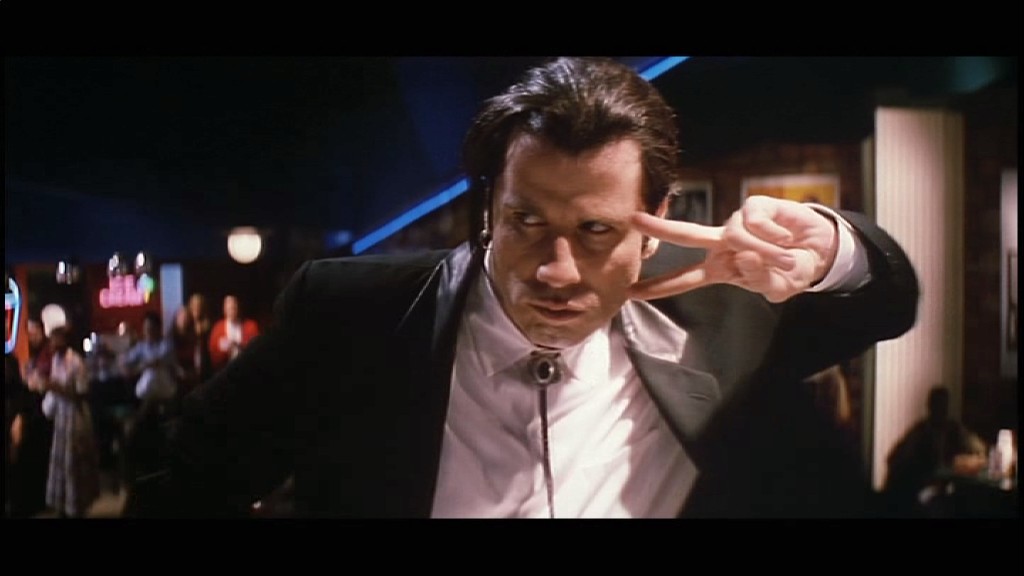

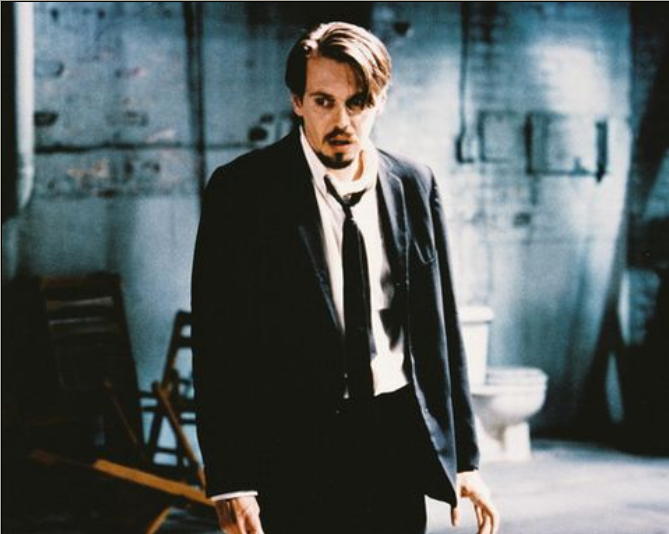
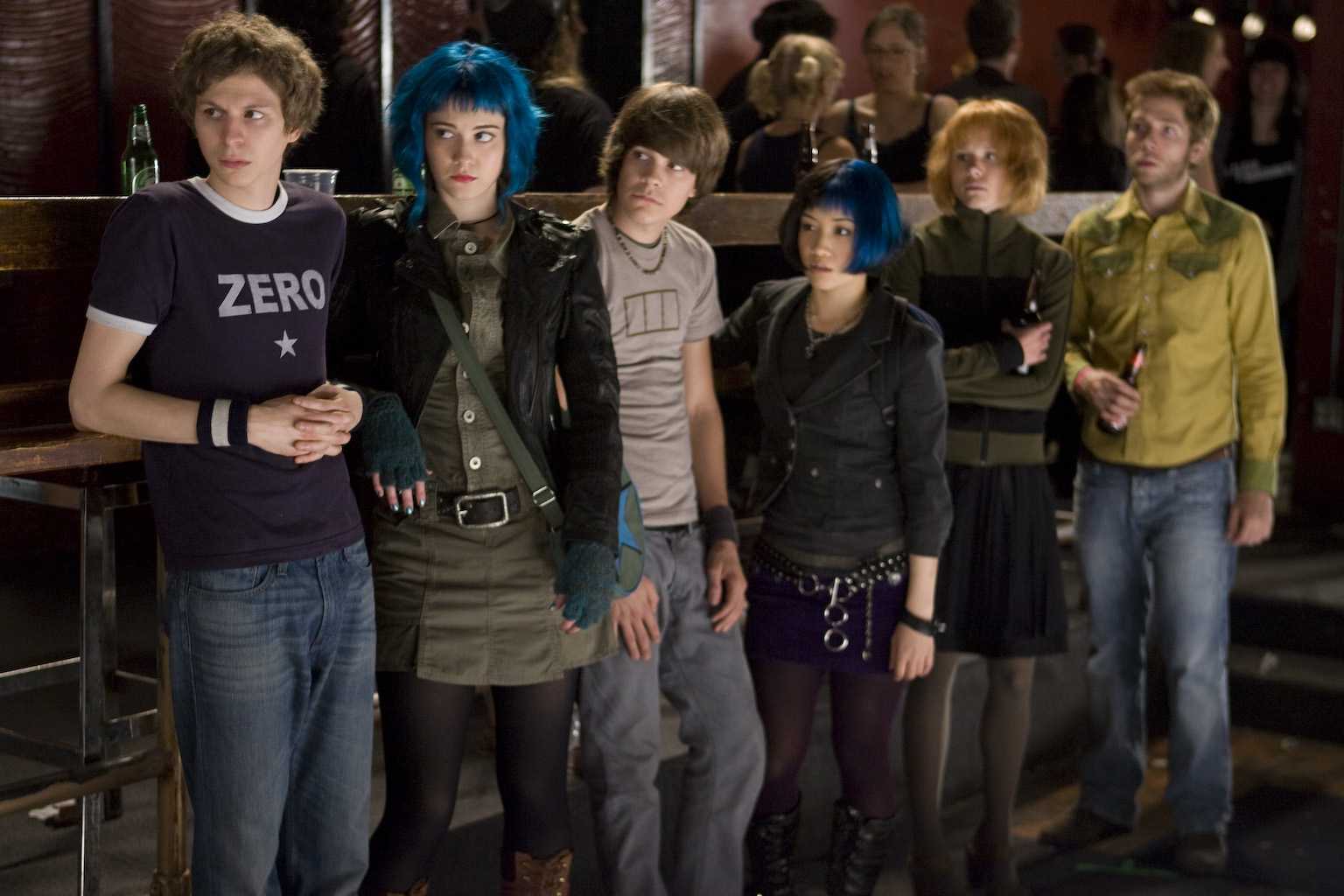

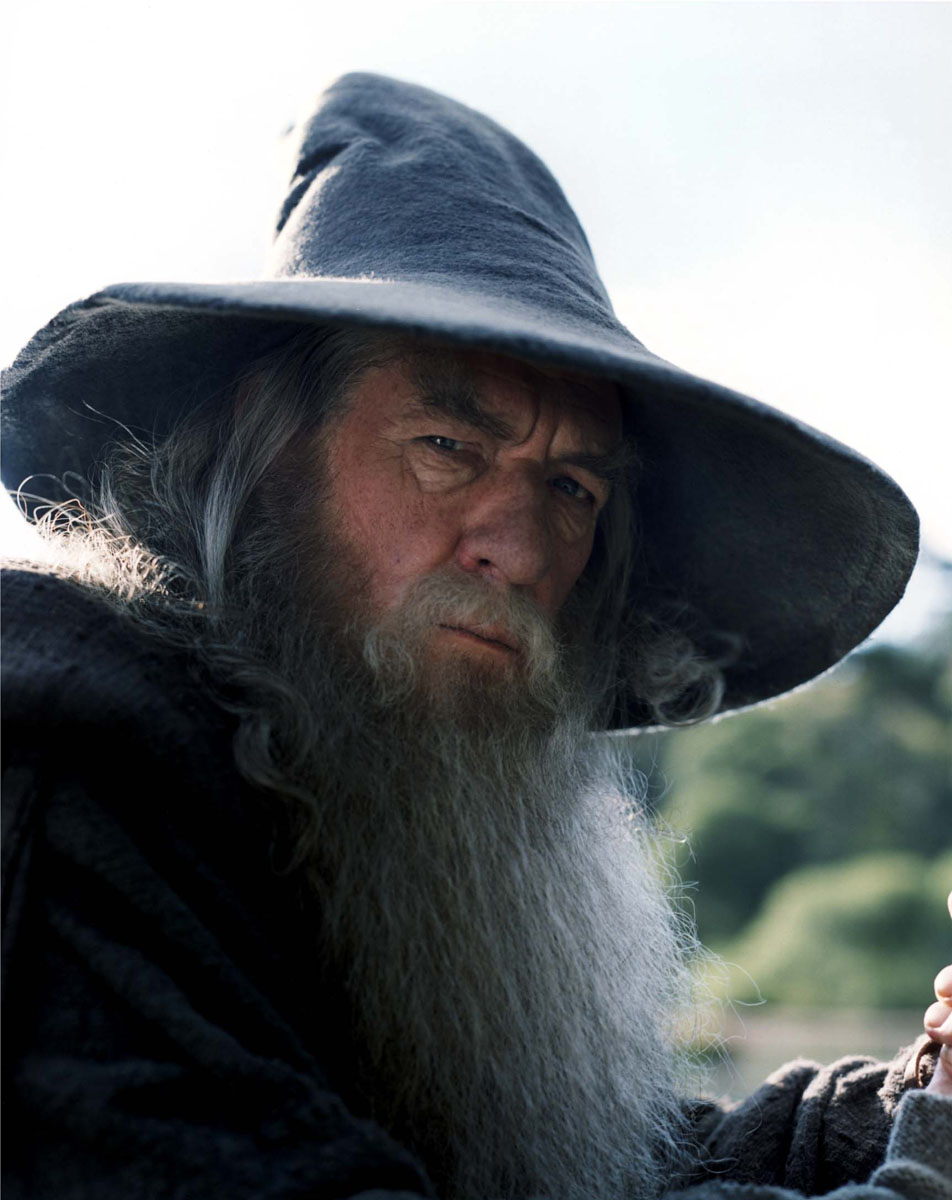
So please. Can we quit it with these silly, reductive claims of Hikki being a derivative character? Because honestly, even if this weren’t one of the most common character types of all time, it’s also just a very misguided read of Hikki’s personality. He’s not a happy or confident guy. He’s dealing with some stuff. Get off his back.
Alright. That’s enough of that; OreGairu, you have the floor.
Episode 7
0:30 – And we’re back to OreGairu frankly dictating the terms of my life. If I spent half the time I spend rationalizing my not responding to texts actually responding to them…
1:20 – Holy shit, did OreGairu just manage a spin on these awful spinster jokes that actually works? This text-stalker gag – distinctive… relatable… actually reflective of character… kinda funny… yep, it checks out. Impressive work, OreGairu.
2:58 – Hikki finally expressed curiosity about that book that ends the OP last episode. I wonder if we’ll get back into that now that we’re in the back half
4:18 – Hey, anime writers? THIS IS HOW SIBLINGS INTERACT. PLEASE, TAKE SOME FUCKING NOTES.
5:12 – Aw man, Yuki almost doing that stupid greeting in spite of herself made me laugh out loud
6:03 – When did the teacher turn into Frau? [RES ignored duplicate image][12]

6:58 – Hayama: charming, genuine, and even good with the kids. Hikki has every right to resent this guy
8:54 – Hikki’s attitude towards Yuki has definitely changed since last episode – he’s picking up on her emotional cues now, and so they’re also being made visible to the audience. Dear lord, does this mean there are ways to depict character growth visually? I thought only KyoAni knew that secret!
9:13 – “’Sharing a secret’ must be one of the techniques he uses to get along with people” – Funny, appropriate to character, and also just kind of psychologically true. All my love, OreGairu
10:31 – Ahhh so great. Hayama is pretty much a natural at diffusing social situations, but his view of people (and understanding of how they naturally react, being himself someone who has no trouble integrating into any social situation) means he just leads the loner to the other kids and assumes that will fix things. And of course Hikki and Yuki now actually getting along (in a way that doesn’t even slightly resemble the Araragi/Senjou confident, antagonistic flirting AHEM) is just awesome to see
11:32 – “Yeah, it’s got all sorts of weird stuff!” I love these moments where Hikki accidentally realizes he’s not actually that different from anyone else, and it freaks him out
18:20 – I think this show’s just fucking with me now. That conversation where all of them have such specific, individual perspectives on how social situations work was going so well, and Hina’s point about finding people you relate to through your hobbies is actually entirely true, and then… well, each episode’s gotta have one stupid joke…
18:58 – Damnit nice people, don’t diffuse the situation! They must fiiight
19:20 – “You know you’re inferior, so you feel like you’re being looked down on.” Is it wrong of me to pretty much assume this is a big part of the actual motivation behind American anti-intellectualism?
19:40 – Man, they really do only use that guy for gay jokes, don’t they? I’m pretty damn happy Brain’s Base cut out whatever their “date” from the third LN would have entailed…
20:38 – “I took 30 minutes to defeat her, and ended up making her cry.” Man, this is so damn good. First, it’s great that they know they don’t need to show any of this – we can pretty much visualize that entire conversation. But mainly it’s great to see Yuki’s deep-seated anger express itself in such harmful ways, and show that while she’s definitely smart, she’s still at a point where she can’t use it productively, and lashes out at people for their weakness because she’s not mature or confident enough to accept them or herself. She sees people’s shields, but she can’t empathize with them, and only hates them for it
And Done
Aww. I think that at this point, since Hikki and Yuki are actually pretty close friends by now, I’m just going to like the show more and more going forward. I know, it seems impossible – but smart characters having such full and honest conversations is pretty much everything I want out of this genre. This episode also had a ton of great social commentary, and finally pitted the two most naturally antagonistic characters against each other, with a wonderfully understated and totally believable result. Also, the way this show handles romance is so damn good – so many (bad) shows just have characters antagonize each other or avoid talking honestly for endless sets of episodes, interspersed with maybe a few random moments of honesty, and then bam they wuv each other. But here? Yuki and Hikki started out as pretty defensive but already complementary people, and over time they’ve come to understand and obviously respect each other, even valuing the other’s opinions. But there’s still barely any romance there – they’re still just good friends. However, between the last episode and this one, Hikki has begun picking up on Yuki’s emotions much more sharply, and Yuki has begun trusting Hikki with her own personal problems and questions – finally, at the end of this episode, Hikki directly asks what her relationship with Hayama is, something he wouldn’t have cared about in the slightest a few episodes ago. All these small pieces build off each other wonderfully, and everything else is so smart, and the writing is so good, and, and damnit OreGairu I’m doing it again…
Hataraku Maou-sama! – Episode 7
You’d think the show to most frequently surprise me would be one of the trickier ones – Gargantia is the obvious choice, but maybe Aku no Hana, or even Crime Edge. But no, my predictions have most often been flummoxed by the goddamn comedy.
I write down “I hope it’ll stay this funny” and it switches to excellent character drama. I swerve to “I hope it can keep developing these characters” and it introduces some themes about the capitalist class structure. I sigh and type “I hope its ideas can remain this insightful” and it goes BACK to comedy, with some action/drama thrown in for good measure. I decide to be content with whatever it throws at me, and then it throws out its first actual filler episode.
So yeah. Maou’s undoubtedly a slippery beast. I wasn’t a huge fan of last episode, mainly because I felt it didn’t really do much for the characters or ideas, but I think it was basically just indicative of the sometimes-unwieldy process of adapting a series of distinct Light Novels into one coherent anime. With that in mind, I have high hopes for the show now that we’re back in the swing of things and introducing religion into the mix, and I’m optimistic that “It will probably be pretty great” will prove to be a safer prediction than any of my previous ones. Capitalism, ho!
Episode 7
1:38 – That slowmo letter reveal. I didn’t find it that funny last episode, but the more they abuse the joke, the funnier it becomes
1:57 – Hikikomori translated as “bum” – I guess that works
2:15 – Again, the soundtrack is an all-star here, with those classic strings making her costume even sillier
5:55 – “You could say I’m just stalking some veterans who are peacefully living out their days…” Got it in one! Well, two, that was your second guess. Still good!
6:22 – “It really feels like there’s another Alsiel now.” Does that mean Alsiel gets a love interest?! WAS MY LOVE NOT GOOD ENOUGH FOR HIM?!?
9:44 – I love how we get like a quarter-second shot of Alsiel looking impressed at the Shift Manager speech, but nobody else gives a shit
10:45 – “I get the feeling I’ve gone through this before…” Well at least even the show recognizes these tsundere speeches are getting pretty tired
12:25 – Wow, they played that misunderstanding so goddamn straight. Beautiful. Golf clap for a show confident in not having to overplay its jokes – normally my biggest problem with anime comedies is the massive prevalence of“that’s the joke!” overplaying of every single gag, and here they don’t acknowledge this conversation is ridiculous in any way
13:42 – It turns out heat stroke just makes Alsiel even more moe
16:09 – Ehh, this Light Novel adaptation stuff still just gets to me. The first five episodes were so self-contained, and every piece built to a coherent finale that gathered up all the existing ideas – and now there’s just a lot of stuff happening in a variety of directions, and it’s feeling more like a television show than an anime.
Okay, I know that doesn’t actually make sense. But one of my favorite things about anime is that, unlike virtually all western television, it doesn’t have to be a commercial, seasonal product – it doesn’t have to maintain status quo, it doesn’t have to indulge in episodic conflicts, it doesn’t have to manage a variety of themes but never advance them. It can tell a story, and then at the end, that story will have been told, and everything will have fit together to make a specific point or detail the journey of some specific characters or whatever. But with these Light Novel adaptations, those “commodity” strings just become much more apparent, unless the Light Novel is already concluded and the anime staff have the freedom to draw elements into one continuous narrative. So when I see a show like Maou, where in the first five episodes every single element built to a coherent point, change gears and start using the status quo to build towards another “conflict-of-the-week” (or four weeks, or w/e), it’s just kind of disappointing. The writing and characters are still good, but I feel episodic adventures are just never as satisfying as fully articulated stories.
16:21 – …that said, “Tomorrow will see the opening of a formidable foe… Sentucky Fried Chicken” is a great line
19:16 – Aha flinging the cashier aside. Great stuff
And Done
Eh, that was fine. Funny as always, though I’ve had more than enough of Emilia’s tsundereness at this point – are there really people out there not yet tired of this shtick? A new threat has been introduced, new romantic troubles, Maou and Alsiel’s new neighbor seems like a solid addition to their domestic life… all this was good stuff. Alsiel still #1. But I really do hope this show gets back to the stuff that really raised my expectations – Maou’s perspective of his own past self, Emilia’s changing perception of how people work, both of them seeing society from the ground up for once. I know, I know, this is a comedy, I shouldn’t get disappointed over things comedies don’t generally do anyway. But this show did bring up those ideas, and kept the episodes they were inside just as funny – it might be greedy of me, but I want that stuff back.
Still a solid show though, and things should continue to gain more momentum again next week. If it trades off a couple of straight setup episodes with a few awesome resolution episodes again, I’ll be more than satisfied.